शिकवण · भागवत गाथा · पुस्तक ०
Who is Narada? The wanderer between the worlds
The sage with the veena appears at every turning point of the Bhagavata — and he begins it. A short guide to the character who opens Book Zero.
The Editors, Naimisha Press २ मिनिटे
सध्या फक्त इंग्रजीत

If the Bhagavata had a single figure who moves its story along, it would be Narada. He is a son of Brahma, born of his mind, and he belongs to no one place: he travels the worlds with his veena, singing the names of Hari, and arrives — usually unasked — exactly where something is about to change.
He begins the Bhagavata
In the first skandha, Vyasa has compiled the Vedas, written the Mahabharata, and is still not at peace. Narada visits him and names the gap: Vyasa has described dharma at great length, but he has not sung the glories of Bhagavan Himself. Then Narada tells his own story — how, in an earlier life, he was the son of a maidservant who served visiting sages, and how listening to them as a child turned his whole life toward Hari. Vyasa sits down by the Sarasvati and composes the Bhagavata. Book One’s second episode, Vyasa’s Sorrow and Narada’s Song, is this conversation.
He teaches the ones who teach us
Narada gives the young Dhruva the mantra oṃ namo bhagavate vāsudevāya and sends him into the forest. He teaches Prahlada’s mother while Prahlada listens in the womb. Again and again, the Bhagavata’s great devotees are students of the wanderer.
He opens Book Zero
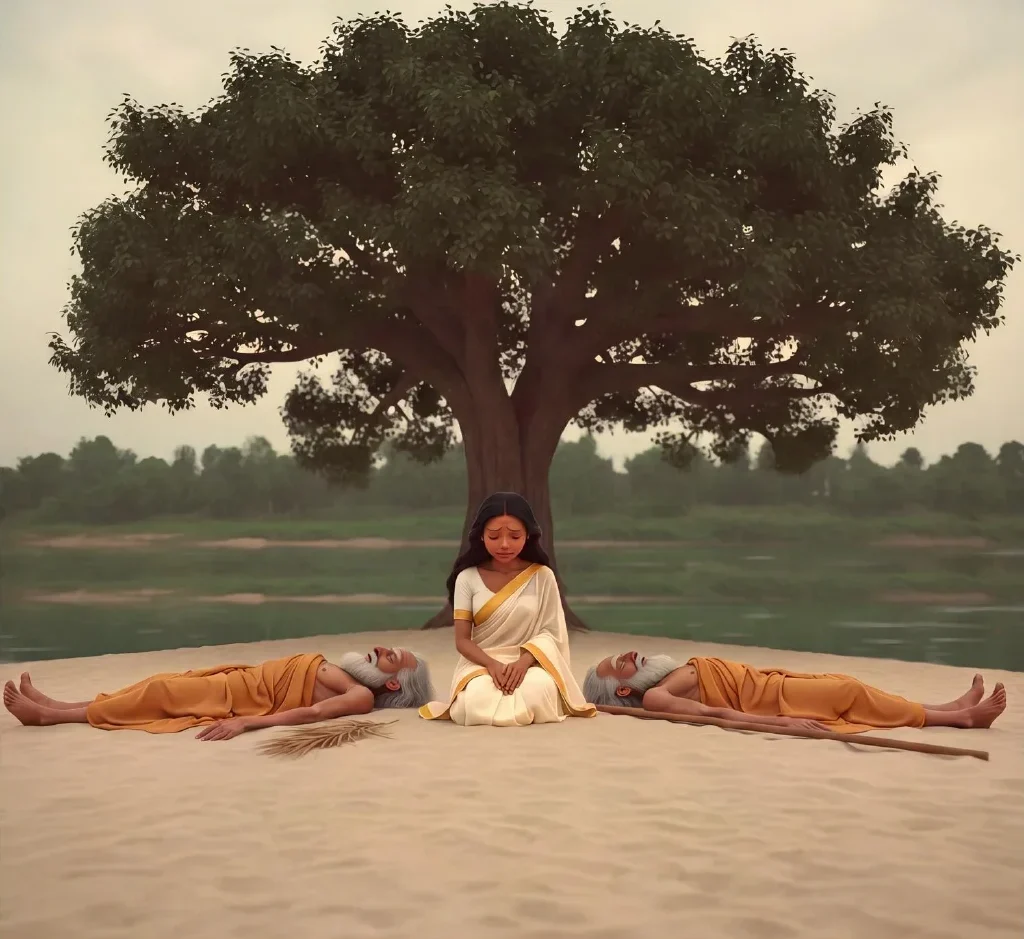
In the Mahatmya, it is Narada who finds Bhakti weeping on the bank of the Yamuna, and Narada who will not stop looking for the remedy. Our Book Zero opens with him on the river path at dawn — the first person in the Chronicle you meet, and the first one asking the right question.
Names in this post follow the register of the books: Narada, Krshn, Dwarka, Vaikunth.
हे कुठून सुरू होते
हे दृश्य पुस्तक ०, प्रकरण पहिले मध्ये वाचा — विनामूल्य.
चौदा पाने, तीन भाषा.
आणखी वाचा
 आजचा धर्म
Why devotion tires: Bhakti’s sleeping sons and an age of distraction
In the Mahatmya, Bhakti is young and her sons — knowledge and detachment — are old and will not wake. A reading for anyone whose attention has worn thin. आठवड्याचा श्लोक
Satyaṃ paraṃ dhīmahi — the phrase that opens and closes the Bhagavata
Verse of the week. Three words at the end of the Bhagavata’s first verse, and again near its close — on the highest truth, we meditate. शिकवण